Kategorie: Programme

  • spiegel~ collective: Vluor  Interactive spatial sound installation

    spiegel~ collective: Vluor
    Interactive spatial sound installation

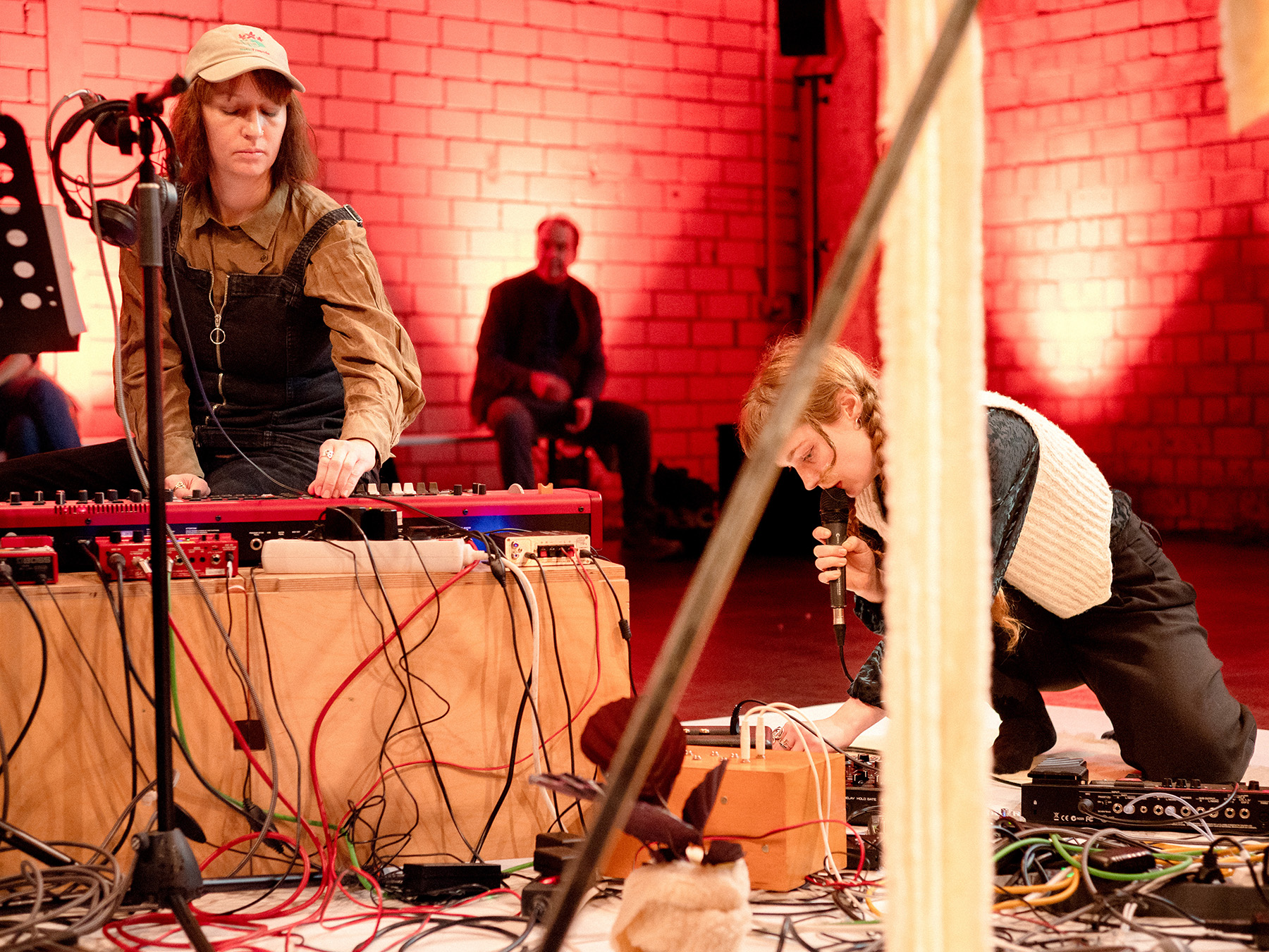
    Vluor (Heather, arable landscape, field) is a sound and spatial installation comprising hay, wool, ceramic objects, medicinal plants and sound generators distributed throughout the space. Visitors approach and enter into a dialogue with a soundscape composition made up of multi-layered sounds from places and living beings. Ancient cultural techniques, tied to fauna, landscape and the earth, intertwine with sound objects triggered by proximity and movement to form a multisensory entity.
    Vluor creates an environment that challenges our learned, utilitarian relationship with the environment and invites the viewer to attune themselves to our ecosystems.

  • Paulo Amendoeira:  light smashed into pieces

    Paulo Amendoeira:
    light smashed into pieces

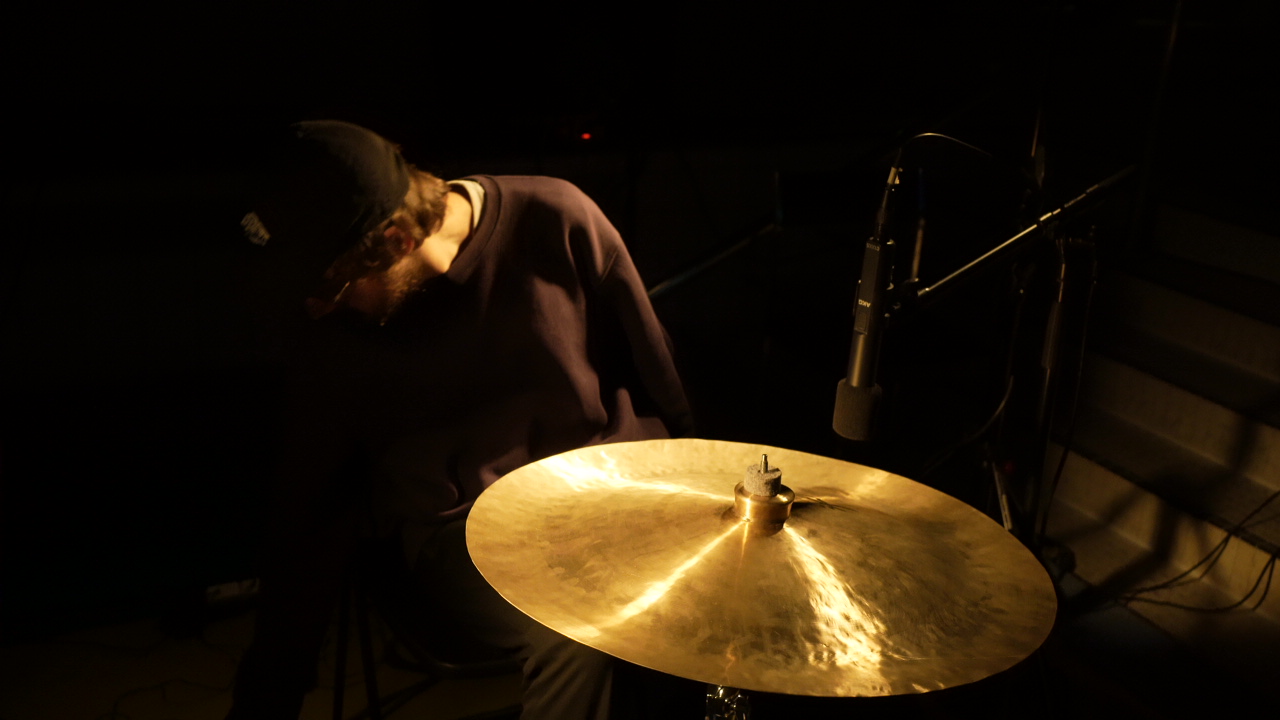
    After releasing cymbal music vol.1 in October 2026 as a self-published release, Paulo Amendoeira is currently in the phase of concluding the mixing of light smashed into pieces, his first release featuring his own music: pieces created and produced by him, that encompass new sounds found on a china cymbal and a delay system created by a very fruitful accident during one of the recording sessions, back in June 2026.

    Those recordings were the outcome of Paulo’s last available hours at the studio of the Hochschule der Künste Bern, before concluding his studies there. The idea of this album is also one of complementing the repertoire present in cymbal music vol.1: his artistic ideas have grown and been enriched by the process in the latter album, thus the need to create original pieces, with instrumental and electronic expansions surrounding the cymbal. The sound can drift from vast, post-apocalyptic landscapes, occasionally lit by feedback chirping birds to relentless, driving metallic drones.

    The album is planned to be released in June 2027, accompanied by a release tour across Switzerland, Portugal, The Netherlands, Germany, Belgium and Spain. But Paulo agreed to give a pre-release-concert at klub katarakt 2027 – we are excited!

  • Frank Bretschneider: Pounding

    Frank Bretschneider: Pounding

    Unequal cycles searching for synchronous experiences: In his work Pounding, Frank Bretschneider tells of distance, convergence and congruence in a continuous, ever-changing flow of events. What is often considered to be an unquestionable dogma in club music (for which Bretschneider has provided significant impetus since the 1990s) – the groove – appears precarious, unstable, and in motion. Pulse and accent are volatile encounters and have to be found again and again for short, delightful moments. Music becomes a constant process of negotiation.

    In search of new sound spaces, Bretschneider has recently worked a lot with modular synthesizers, both solo (for example on abtasten_halten, 2020) and in collaborations, including the project Beispiel together with Jan Jelinek. Pounding was created using similar means – conceived in 2020 for the Pochen Biennale in Chemnitz, subsequently developed further and recorded in March and April 2023 on a sample-based modular system. And in fact, Bretschneider is once again exemplarily scanning his own sound material, for example Dub effects that listen to themselves crumbling. But also the human voice, or more precisely: the stuttering of fragments of speech, far in the distance but omnipresent, like a mysterious narration. Aesthetically, the eleven pieces form part of a series of works with a focus on percussion. Bretschneider has already perfected this approach with albums like Rhythm (2007) and has been shifting the perspective ever since, for ever new results.

    Shifting is the basic principle of Pounding. Bretschneider combines elements that are in different aggregate states, changing their relationship to each other and thus ensuring the complex overall movement. He lets one to two-bar loops run against each other and through manipulations, develops a network of rhythms that creates a hypnotic state in the counterplay of repetition and mutation, between clearly recognizable meter and disorientation. There are comparable approaches in aleatoric music. Bretschneider combines them with sounds and patterns that are reminiscent of step sequencer logic and at the same time go far beyond it. The result is relational techno. Never clear, constantly restless and exciting.
    (Arno Raffeiner)

  • OEIN III  Traditional Indigenous Music

    OEIN III
    Traditional Indigenous Music

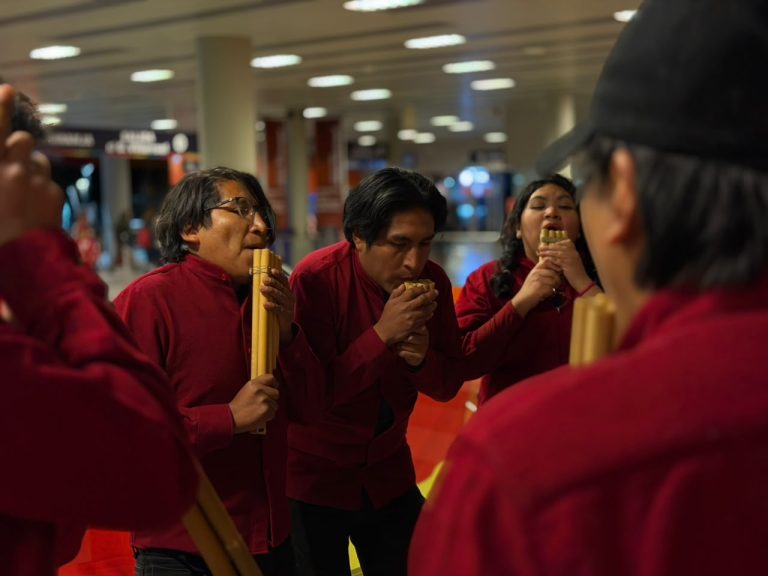
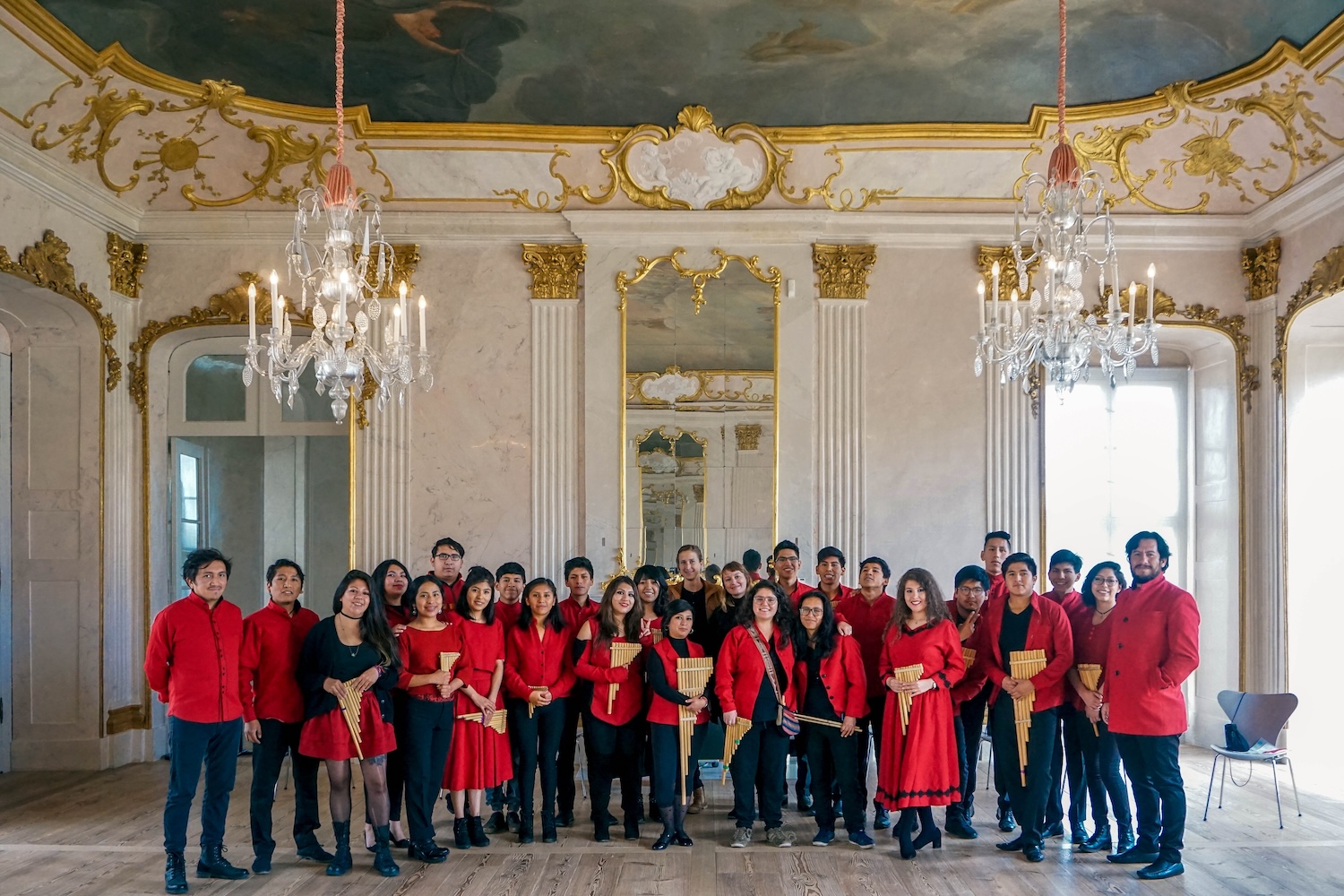
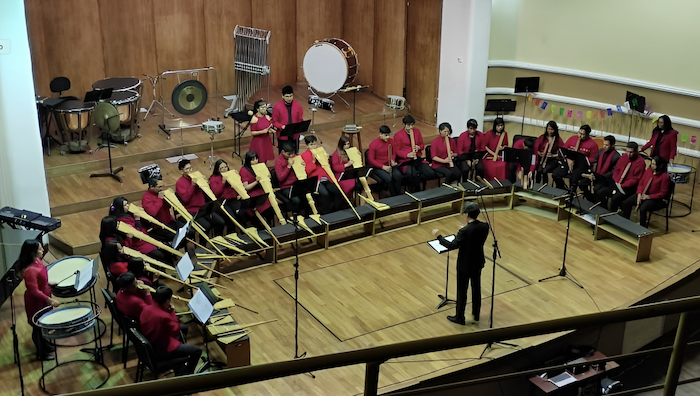
    The third concert by the Orquesta Experimental de Instrumentos Nativos (OEIN) will bring together Indigenous musical practices from different historical moments and places, not as fixed traditions, but as living forms that continue to evolve. The programme moves across time, connecting ancient sound concepts, performance techniques, and instrument technologies with contemporary ways of listening and making music.

    At the core of the performance are shared acoustic phenomena found across many Indigenous traditions: beating tones, split sounds, and complex layered timbres produced by instruments such as sikus, tarkas and pinkillus. These sonic qualities create a common ground between repertoires, allowing the music to unfold as a continuous fabric rather than a sequence of separate pieces.

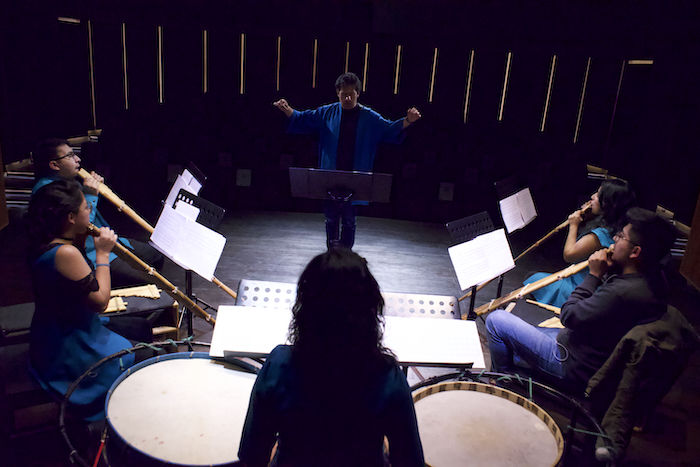
    The concert will be conceived as an immersive experience, where sound moves through space and the orchestra surrounds the audience. Listening becomes part of the performance, inviting attention to subtle changes, textures, and interactions between musicians.

    As the concert progresses, it gradually opens toward a speculative future. New and imagined instruments emerge, extending ancestral knowledge into new forms. Rather than breaking with tradition, these gestures suggest that Indigenous musical thinking already contains its own futures.

    The result is a sonic cosmovision in motion – an evolving mesh of past, present, and possible futures – where the act of performance becomes a site for rethinking time, materiality, and the politics of listening.

  • OEIN II  Contemporary Experimentation

    OEIN II
    Contemporary Experimentation

    In its second concert at klub katarakt, the Orquesta Experimental de Instrumentos Nativos (OEIN) presents four works that approach Indigenous instruments and musical practices not as fixed traditions, but as active fields for contemporary experimentation. Bringing together music by Tania Rubio, Raven Chacon, Matías Rosales, and Carlos Gutiérrez, the programme moves between territory, notation, visual representation, spatial organisation, and collective forms of sound-making.

    Across these works, the score itself becomes a site of inquiry. Conventional notation is displaced, expanded, or confronted with other systems of representation: field recordings and instrumental mappings derived from ecological research; graphic signs whose interpretation exposes assumptions about Indigenous identity; polygonal and circular structures translated into rhythm and gesture; and networks of panpipe articulations conceived through the Aymara idea of ch’ipa, an interwoven structure held together through tension and interdependence.

    The programme also explores different relationships between sound and space. In Entre la Selva y el Altiplano, Tania Rubio draws on research and recordings made in two radically different Bolivian ecosystems, transforming environmental listening into an immersive instrumental landscape. Raven Chacon’s …lahgo adil’i dine doo yeehosinilgii yidaaghi turns visual signs and the act of interpretation itself into compositional material, questioning expectations projected onto the work of an Indigenous composer. Matías Rosales transforms pedagogical tools developed through his work with OEIN into a real-time visual system for producing intricate rhythmic and gestural relationships. In Ch’ipa X, Carlos Gutiérrez distributes panpipe constellations through the performance space, creating a sonic network in which proximity, distance, and resonance continually reshape the music.

    What connects these very different works is not a single idea of “Indigenous music”, but a shared questioning of how music can be organised and transmitted: how a sound becomes part of a collective, how knowledge can take the form of a diagram, a landscape, a symbol, a gesture or an interlocking rhythm, and how listening changes when these relationships are made audible.

    Here, the OEIN functions less as a conventional orchestra than as a mutable collective instrument. Its native instruments, their particular acoustics, and the musicians’ long experience of playing together become the ground from which different compositional systems can emerge, collide, and be reinvented.

  • Presentation OEIN

    Presentation OEIN

    Tatiana Lopez Churata und Carlos Gutiérrez Quiroga – both musicians and composers in the Orquesta Experimental de Instrumentos Nativos (OEIN) from Bolivia – will talk about the diverse work and the perspectives of the ensemble as a collective.

    The OEIN is operating less as a traditional ensemble and more as a collective platform for research, experimentation, and creation. Rooted in the sonic knowledge of the Andean region, the group has expanded its practice beyond performance to engage deeply with questions of listening, memory, and the evolving life of indigenous musical systems.

    In Cooperation with the Verband für aktuelle Musik Hamburg.

  • Marta Zapparoli:  Interdimensional Generated Space

    Marta Zapparoli:
    Interdimensional Generated Space

    Italian Marta Zapparoli works at the intersection of physics, technology, and the invisible natural and technological environment. Using antennas (some of them self-made), radio receivers, sensors, and analogue technology, she creates site-specific installations, performances, and compositions.

    At klub katarakt, she will be presenting her work Interdimensional Generated Space. It explores the electromagnetic phenomena of the northern lights through a composition of self-recorded VLF radio signals collected in Norway, combined with antennas, radio receivers, detectors, light projectors, the unique Artifact Aurora Borealis plasma instrument, and motors.
    Blending natural radio emissions with live-generated electromagnetic fields, the work invites audiences on a multidimensional sensory journey, allowing them to experience the aurora’s electromagnetic dimensions while exploring the relationship between natural-cosmic forces and technology.

  • Peter Kutin & Patrik Lechner:  ROTOЯ – Sonic Body

    Peter Kutin & Patrik Lechner:
    ROTOЯ – Sonic Body

    With ROTOЯ, Peter Kutin (concept, composition, live electronics) collaborates with Patrik Lechner (live-video-projections) and Mathias Lenz (mechatronics) for this furious und hypnotising live-performance.

    Following the basic parameters of Kutin’s kinetic object TORSO#1 from 2018, ROTOЯ applies an even more intense acceleration onto these media-branches sound, image, light and object. It reaches stages where the rotating sound-sculpture transcendes into a hologram alike sonic-body, a kinetic-performer that is passing and morphing through unpredictable heterochronic states by establishing a beguiling complex multimedial polyrhythm.

    … the sculpture fans out into geometric forms, bunches into images of a diffused reality. Due to the constant acceleration, it’s no longer possible to perceive the movement in detail, but instead, lines, colors, surfaces, and sounds rush past us.

    … In the cyclical movement, image and sound conspire and work towards a dizzying and unreal threedimensionality, a play of visibility and invisibility, actuality and virtuality, visual abstraction and acoustic affect.
    (Shilla Strelka)