Autor: Jan Feddersen

  • Orquesta Experimental de Instrumentos Nativos

    Orquesta Experimental de Instrumentos Nativos

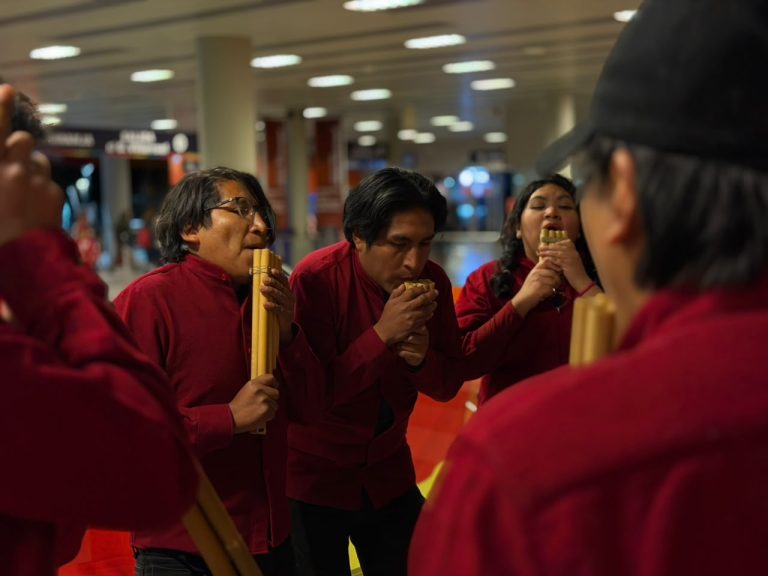
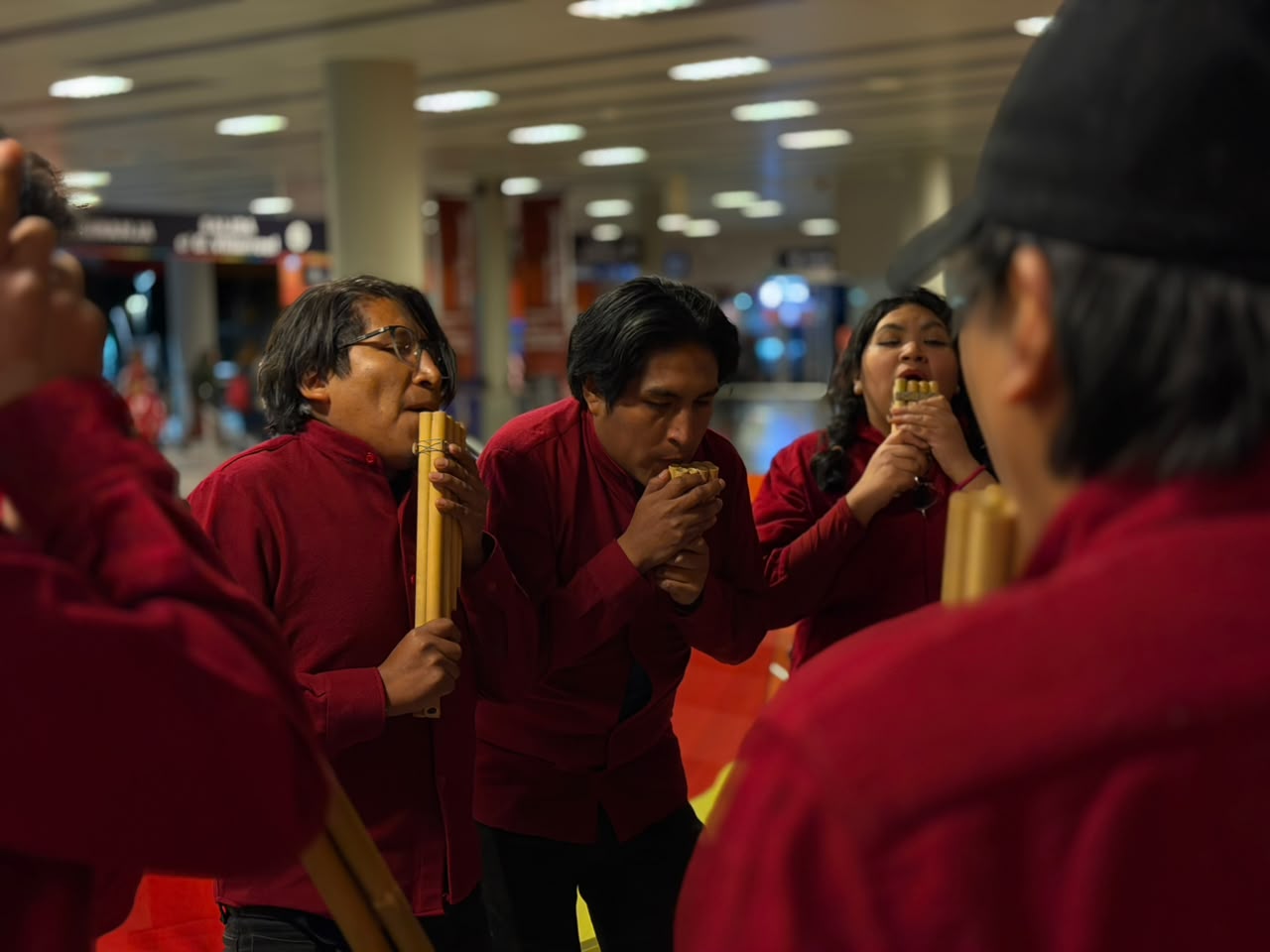
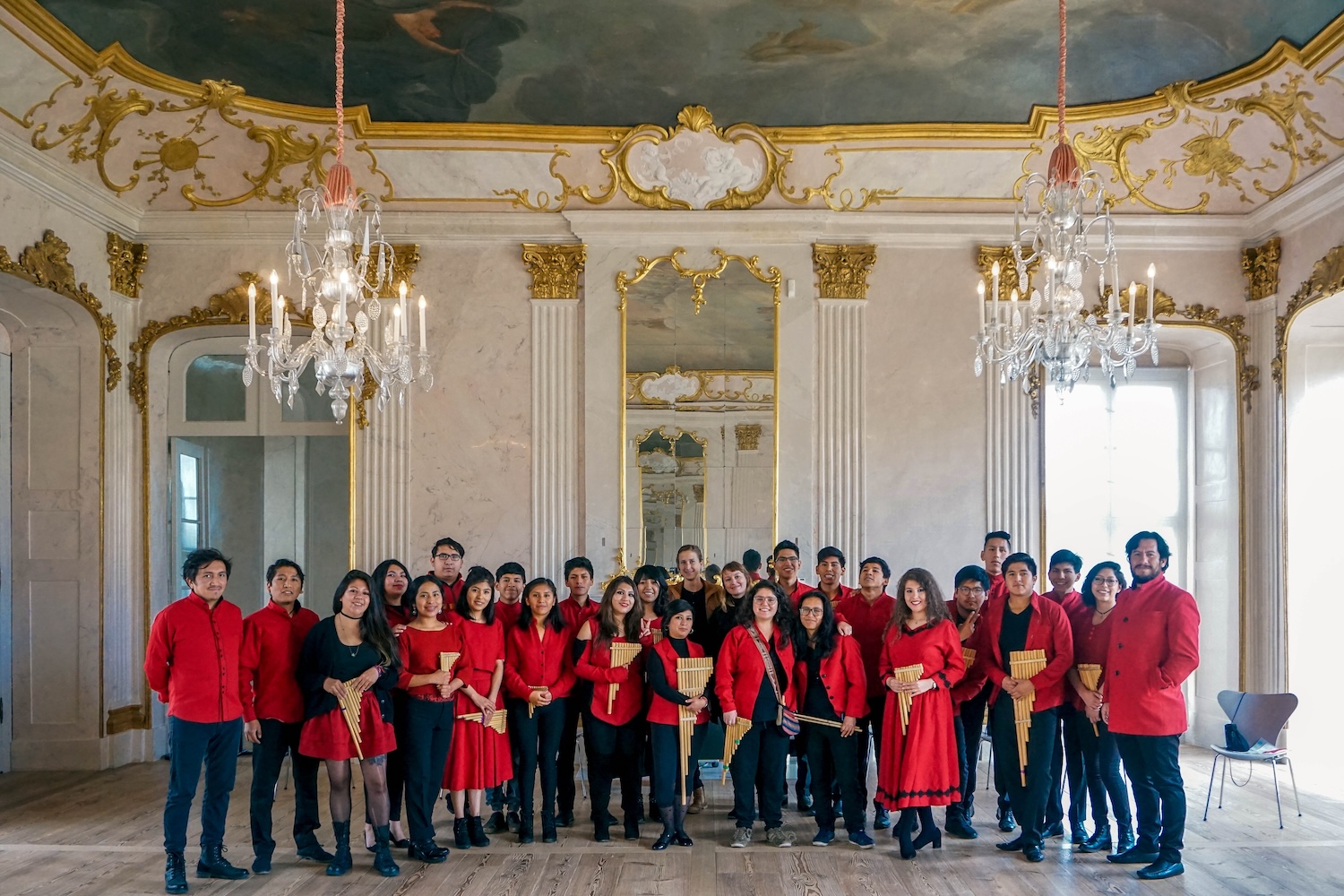
    The Orquesta Experimental de Instrumentos Nativos (OEIN) is a collective of sonic research and creation that works from Indigenous Andean musical practices to develop contemporary forms of composition, listening, and performance.

    In recent years, the OEIN has consolidated itself as a singular force within contemporary music, operating less as a traditional ensemble and more as a collective platform for research, experimentation, and creation. Rooted in the sonic knowledge of the Andean region, the group has expanded its practice beyond performance to engage deeply with questions of listening, memory, and the evolving life of Indigenous musical systems.

    A defining aspect of their recent work is the integration of research and creation. Projects often emerge from sustained engagement with historical archives, oral traditions, and community-based knowledge, which are then reinterpreted through collaborative rehearsal processes. This has led to performances that feel both grounded and forward-looking, where ancestral practices are neither preserved nor abstracted, but transformed through collective exploration.

    OEIN’s performances emphasize spatialization, embodiment, and the social dimension of sound. The ensemble frequently reconfigures the relationship between musicians and audience, creating immersive environments where listening unfolds as a shared experience. This approach reinforces their broader artistic position: music not as a fixed object, but as a dynamic, relational practice.

    Through this sustained work, OEIN has positioned itself at the intersection of Indigenous knowledge and experimental music, contributing a distinct voice to global contemporary discourse while remaining deeply connected to the territories and communities from which its sound emerges.

  • Frank Bretschneider

    Frank Bretschneider

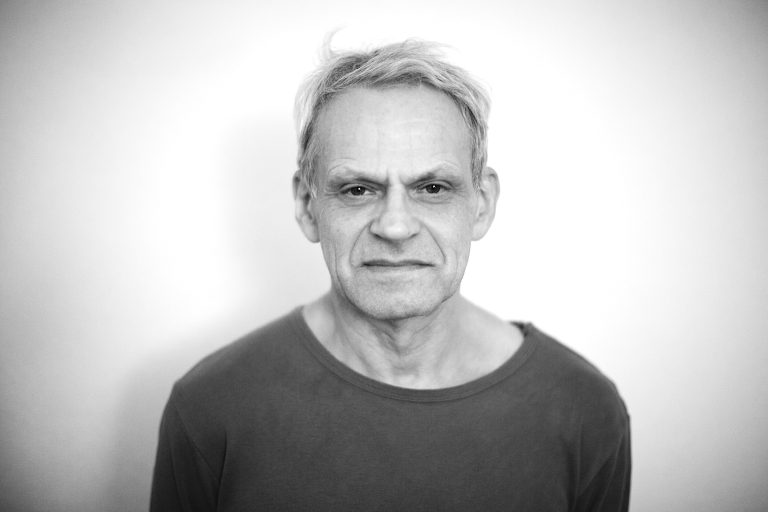
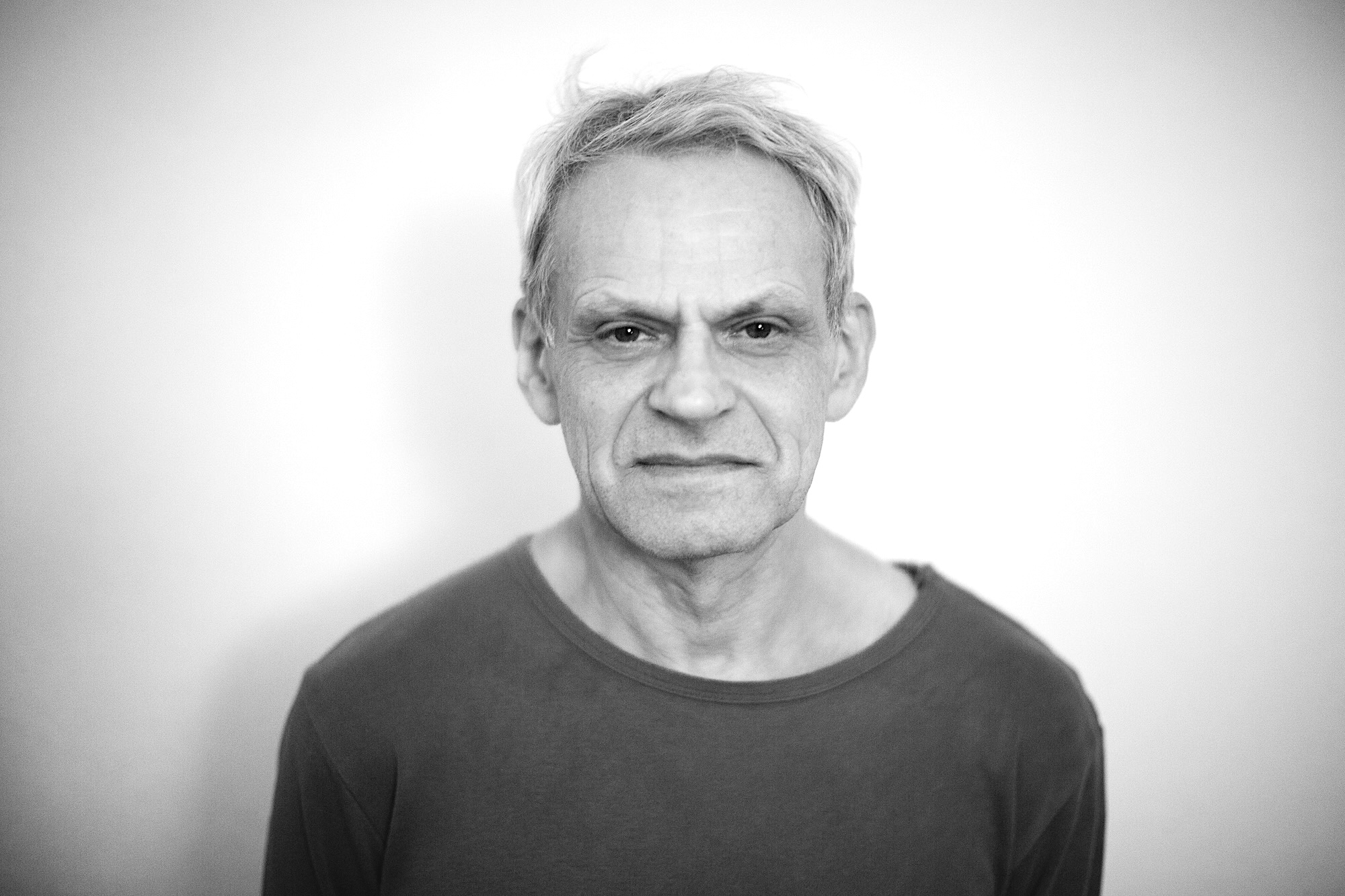
    Frank Bretschneider is a musician, composer and video artist based in Berlin. His work is known for precise sound placement, complex, interwoven rhythm structures and its minimal, flowing approach. Bretschneider’s subtle and detailed music is echoed by his visuals: perfect translated realizations of the qualities found in music within visual phenomena.

    Bretschneider was raised in Karl-Marx-Stadt (Chemnitz since 1990), where his aesthetic developed as he listened to pirate radio and smuggled Beastie Boys tapes in the former East Germany. After studying fine arts and inspired by science fiction radio plays and films he began experimenting with tape machines, synthesizers, and modified guitars in 1984, as well as exploring the possibilities of exchange between visual art and music by various means such as film, video and computer graphics.

    In 1986 Bretschneider founded AG Geige, a successful and influential East German underground band. After three albums and splitting in 1993, Bretschneider and fellow AG Geige member Olaf Bender founded the Rastermusic record label in 1995, which eventually merged with Carsten Nicolai’s noton to form raster-noton (now raster media) in 1999. Since then Bretschneider has released more than 30 albums on various labels including 12k, Line, Mille Plateaux, and Faitiche, exploring the possibilities and boundaries of electronic music, from beat driven, almost club suitable music, to the more adventurous and abstract side of the genre.
    frankbretschneider.com

  • spiegel~ collective: Vluor  Interactive spatial sound installation

    spiegel~ collective: Vluor
    Interactive spatial sound installation

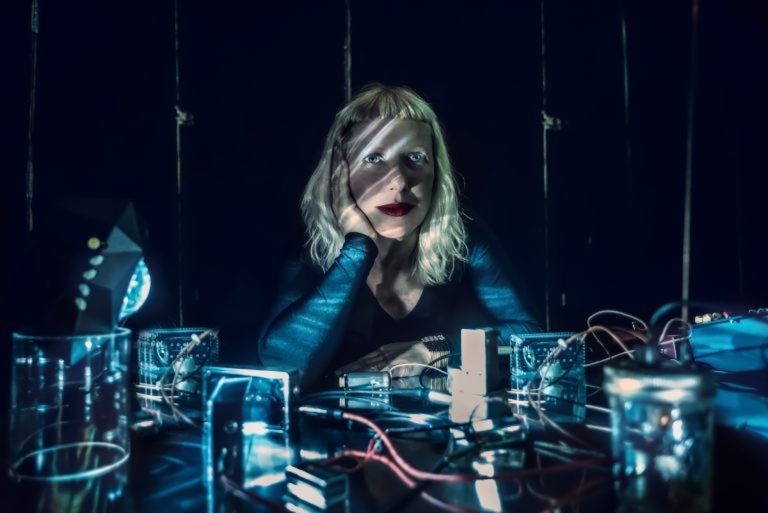
    Vluor (Heather, arable landscape, field) is a sound and spatial installation comprising hay, wool, ceramic objects, medicinal plants and sound generators distributed throughout the space. Visitors approach and enter into a dialogue with a soundscape composition made up of multi-layered sounds from places and living beings. Ancient cultural techniques, tied to fauna, landscape and the earth, intertwine with sound objects triggered by proximity and movement to form a multisensory entity.
    Vluor creates an environment that challenges our learned, utilitarian relationship with the environment and invites the viewer to attune themselves to our ecosystems.

  • Potato Soup + Truffles

    Potato Soup + Truffles

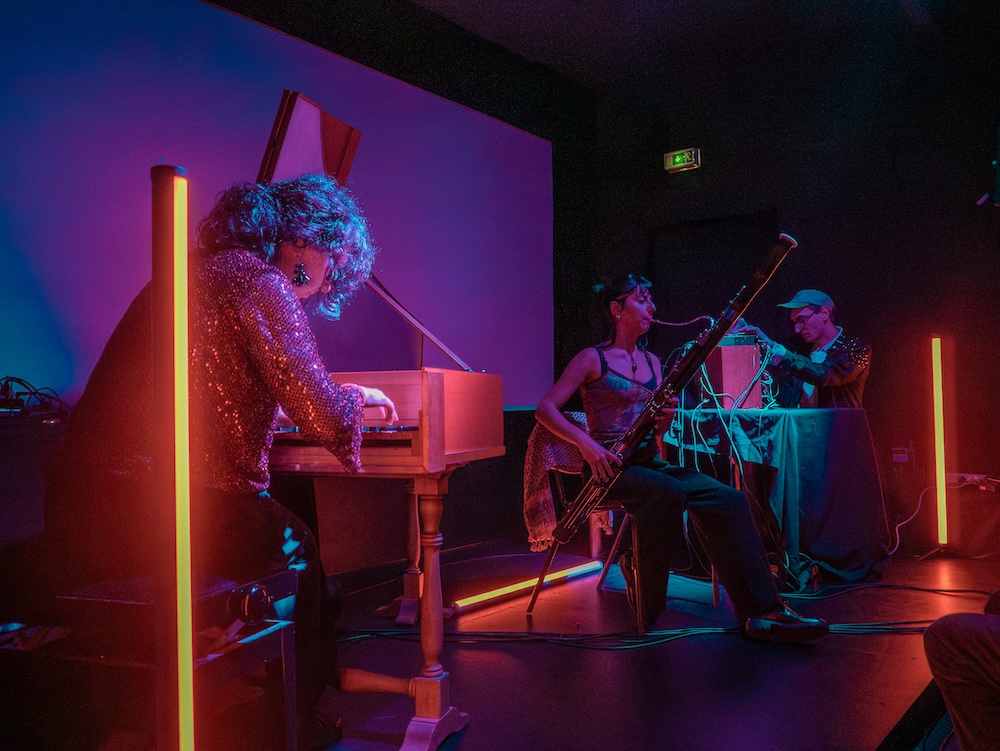
    Since 2025, the trio Potato Soup + Truffles has been blending the sounds of the harpsichord, bassoon, and modular synthesizer.
    The harpsichord and bassoon are modulated live and complemented by synthesized sounds. Through their collaborative interplay, they create multi-layered, improvised soundscapes featuring a wide range of diverse timbres.

    The trio consists of Elena Khurgina (harpsichord), Jeanne Lavalle (bassoon), and Max Gausepohl (modular synthesizer).

    Elena Khurgina is a harpsichordist specialising in early and contemporary music, improvisation and interdisciplinary projects. In her artistic work, she explores the expressive possibilities of historical instruments in a contemporary context.
    Born in Charkiv (Ukraine), she began her musical studies at the Gnessin Academy of Music in Moscow. She subsequently continued her training in Hamburg, where she specialised in the harpsichord and completed her Master’s degree at the Hamburg School of Music and Theatre (HfMT). She also studied Contemporary Harpsichord at the Conservatorium in Amsterdam as part of the Erasmus programme.

    She is the first-prize winner of the Prix Annelie de Man for contemporary harpsichord and performs regularly at international festivals, including the Bachfest Hamburg, blurred edges, The Art of Improvisation, Bach & now!, StimmeX, WePresent, the Feminale Hamburg and others. In addition, she develops innovative educational projects centred on the harpsichord for the Hamburg Open Online University.


    Jeanne Lavalle is a bassoonist and contrabassoonist from Nice (FR). She trained in Paris and Lyon, as well as at the Hamburg School of Music and Theatre.

    She performs with national orchestras in France and, as part of the ensembles BLOC and SPICC, continually explores contemporary sounds, extended playing techniques and improvisation.
    She is a co-founder of Ensemble 404 and Ensemble Potato Soup + Truffles.


    Max Gausepohl is a musician and sound designer working across a wide range of contexts. His artistic practice lies at the intersection of music, sound art and performative media design. As well as creating sound designs for animated films, he is involved in live electronics and spatial audio performances within ensembles and theatre productions.

    As part of the DETEKTOR collective, he develops the sound design for radio plays, which are staged as performative formats at various venues. At the heart of his work lies an exploration of the boundaries between music, abstract sound collages and their spatial composition. His examination of the meaning and impact of sound forms the foundation of his artistic practice.

  • Patrik Lechner

    Patrik Lechner

    Patrik Lechner, born in Vienna in 1986, has been working in the fields of experimental music and real-time video art since the 2000s. Publications in the areas of digital audio effects, multimedia programming in general, audio analysis, AI, industry 4.0. Activities as a lecturer eg. at the Music University of Vienna, the University of Applied Arts, UAS Salzburg and UAS St.Pölten.

    Previous performances of audio/visual performances e.g. in:
    Austria (e.g. Musik Protokoll, Impuls Tanz Festival), Belgium (BAM Festival), Italy, Bulgaria, Germany (ZKM), Canada, Dubai, Mexico (MUTEK), Shanghai 2010 (Expo 2010). Lechner received an honorable mention at the PRIX ars electronica 2019 in the Sound Art category.

  • Paulo Amendoeira:  light smashed into pieces

    Paulo Amendoeira:
    light smashed into pieces

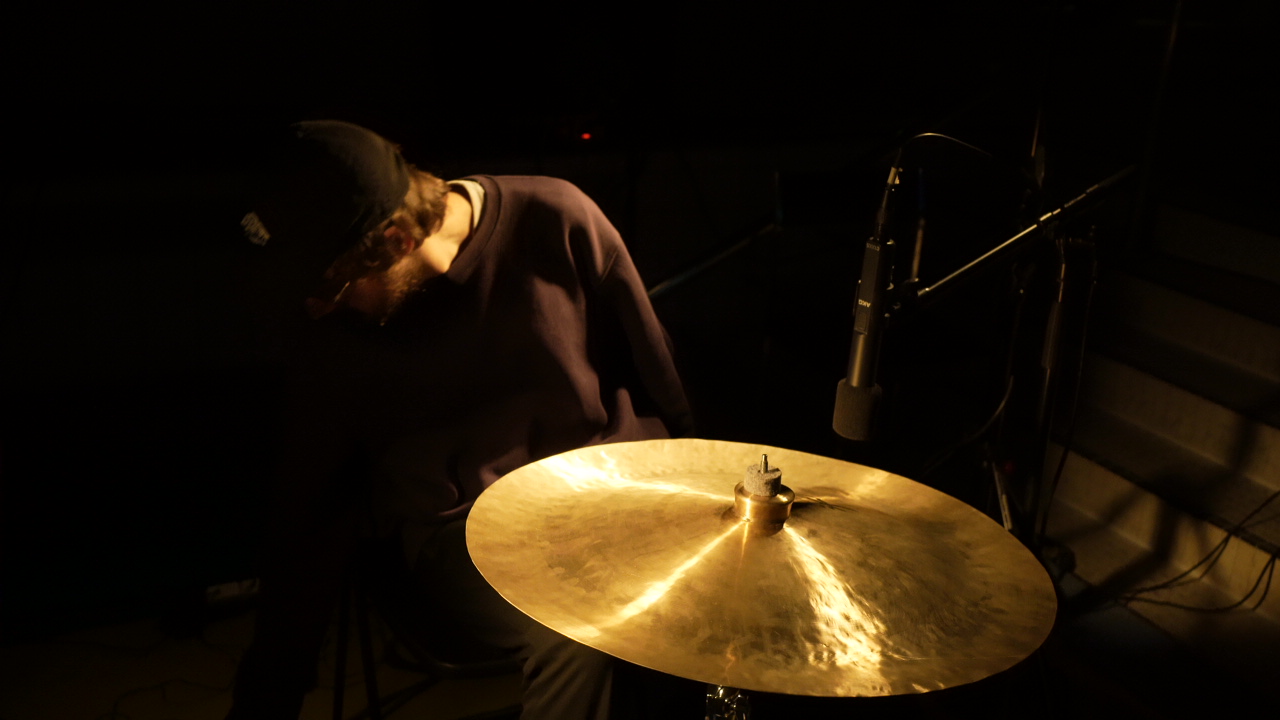
    After releasing cymbal music vol.1 in October 2026 as a self-published release, Paulo Amendoeira is currently in the phase of concluding the mixing of light smashed into pieces, his first release featuring his own music: pieces created and produced by him, that encompass new sounds found on a china cymbal and a delay system created by a very fruitful accident during one of the recording sessions, back in June 2026.

    Those recordings were the outcome of Paulo’s last available hours at the studio of the Hochschule der Künste Bern, before concluding his studies there. The idea of this album is also one of complementing the repertoire present in cymbal music vol.1: his artistic ideas have grown and been enriched by the process in the latter album, thus the need to create original pieces, with instrumental and electronic expansions surrounding the cymbal. The sound can drift from vast, post-apocalyptic landscapes, occasionally lit by feedback chirping birds to relentless, driving metallic drones.

    The album is planned to be released in June 2027, accompanied by a release tour across Switzerland, Portugal, The Netherlands, Germany, Belgium and Spain. But Paulo agreed to give a pre-release-concert at klub katarakt 2027 – we are excited!

  • Frank Bretschneider: Pounding

    Frank Bretschneider: Pounding

    Unequal cycles searching for synchronous experiences: In his work Pounding, Frank Bretschneider tells of distance, convergence and congruence in a continuous, ever-changing flow of events. What is often considered to be an unquestionable dogma in club music (for which Bretschneider has provided significant impetus since the 1990s) – the groove – appears precarious, unstable, and in motion. Pulse and accent are volatile encounters and have to be found again and again for short, delightful moments. Music becomes a constant process of negotiation.

    In search of new sound spaces, Bretschneider has recently worked a lot with modular synthesizers, both solo (for example on abtasten_halten, 2020) and in collaborations, including the project Beispiel together with Jan Jelinek. Pounding was created using similar means – conceived in 2020 for the Pochen Biennale in Chemnitz, subsequently developed further and recorded in March and April 2023 on a sample-based modular system. And in fact, Bretschneider is once again exemplarily scanning his own sound material, for example Dub effects that listen to themselves crumbling. But also the human voice, or more precisely: the stuttering of fragments of speech, far in the distance but omnipresent, like a mysterious narration. Aesthetically, the eleven pieces form part of a series of works with a focus on percussion. Bretschneider has already perfected this approach with albums like Rhythm (2007) and has been shifting the perspective ever since, for ever new results.

    Shifting is the basic principle of Pounding. Bretschneider combines elements that are in different aggregate states, changing their relationship to each other and thus ensuring the complex overall movement. He lets one to two-bar loops run against each other and through manipulations, develops a network of rhythms that creates a hypnotic state in the counterplay of repetition and mutation, between clearly recognizable meter and disorientation. There are comparable approaches in aleatoric music. Bretschneider combines them with sounds and patterns that are reminiscent of step sequencer logic and at the same time go far beyond it. The result is relational techno. Never clear, constantly restless and exciting.
    (Arno Raffeiner)

  • OEIN III  Traditional Indigenous Music

    OEIN III
    Traditional Indigenous Music

    The third concert by the Orquesta Experimental de Instrumentos Nativos (OEIN) will bring together Indigenous musical practices from different historical moments and places, not as fixed traditions, but as living forms that continue to evolve. The programme moves across time, connecting ancient sound concepts, performance techniques, and instrument technologies with contemporary ways of listening and making music.

    At the core of the performance are shared acoustic phenomena found across many Indigenous traditions: beating tones, split sounds, and complex layered timbres produced by instruments such as sikus, tarkas and pinkillus. These sonic qualities create a common ground between repertoires, allowing the music to unfold as a continuous fabric rather than a sequence of separate pieces.

    The concert will be conceived as an immersive experience, where sound moves through space and the orchestra surrounds the audience. Listening becomes part of the performance, inviting attention to subtle changes, textures, and interactions between musicians.

    As the concert progresses, it gradually opens toward a speculative future. New and imagined instruments emerge, extending ancestral knowledge into new forms. Rather than breaking with tradition, these gestures suggest that Indigenous musical thinking already contains its own futures.

    The result is a sonic cosmovision in motion – an evolving mesh of past, present, and possible futures – where the act of performance becomes a site for rethinking time, materiality, and the politics of listening.